Ancient Healing Methods
How the separation of outer remedy from inner work became the deepest problem in modern medicine and what truly integrated medicine looks like.

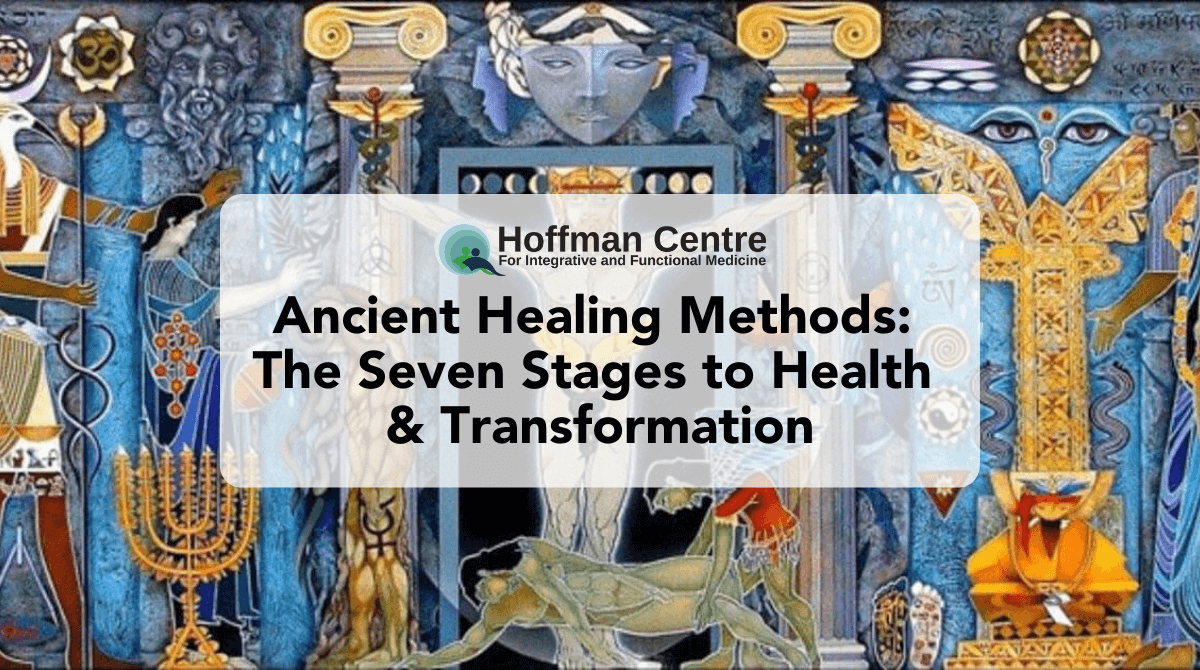
Somewhere in the training of every physician, a line was drawn. On one side is the body, its chemistry, and its measurable dysfunction. On the other is the patient’s inner life, their psychology, their history, their meaning-making. Medical school teaches physicians to work on one side of that line: to understand illness through molecules, receptors, neurotransmitters, genes, pathology, drugs, and surgery. What happened on the other side was, broadly speaking, someone else’s problem. And in that separation lies the central problem I have spent my 40+ year career attempting to address: that even integrative medicine, despite its promises, is not truly integrated. We treat one link in a thoroughly diseased chain and send patients back into the same environment, the same belief systems, and the same lives.
What we lack is a coherent framework that organises the full complexity of human experience into a sequenced diagnostic and therapeutic roadmap. That framework is the 7 Stages to Health and Transformation Model. It moves through seven distinct layers of human experience, from the body’s environment and its biochemistry through the electromagnetic, emotional, and intellectual bodies, into the deeper territories of soul and spirit, and it rests on five core principles:
Mitochondrial heteroplasmy and the Cell Danger Response are at the root of most chronic disease
An expanded diagnostic and treatment model is needed, one that accounts for all layers of human experience, not just the physical
Health exists on a spectrum of possibilities, from the mere absence of symptoms through to longevity, active wellbeing, and ultimately a genuine shift in consciousness
Physics and the bioelectrical field dynamics, not biochemistry alone, represent the dominant organising principle governing health outcomes
The doctor-patient relationship must be fundamentally reframed, from doctor as hero dispensing protocols to doctor as healer who assists in activating the patient’s own innate capacity to heal
The article that follows is Chapter 2 of my unpublished book on the 7 Stages Model. It brings to light the historical perspectives underpinning two of those five principles: the need for a fully expanded model that holds outer remedies and inner work as inseparable and sequential, and what it actually means for a healer to carry wisdom alongside knowledge.
In this article, you’ll find:
The ancient Greek healing temples of Asclepius, where patients were required to travel long distances before any treatment began, and why that intentional journey turns out to be one of the most clinically significant design features in the history of medicine
The outer sanctum and the inner sanctum, the two sequential chambers of the Asclepian temple, and why the order in which patients moved through them reflects the same logic that determines whether modern integrative treatment holds or eventually collapses
The Caduceus, the twin serpent symbol carried by every physician, and what it has always been trying to tell us about the relationship between knowledge and wisdom
Hippocrates, who understood symptoms as the body’s attempt to heal itself, versus Galen, who was the first to treat symptoms as the problem to be eliminated, and why that single disagreement, never resolved, is still quietly governing the way most patients are treated today
What Descartes actually did when he formally separated mind from body in the 1600s, and why that philosophical move, more than any particular drug or protocol, is the deepest structural problem in modern medicine
The ideas at the centre of the 7 Stages Model are not new but ancient. And then, through a series of historical shifts, these ancient healing modalities were systematically dismantled, and what we are left with is a medicine that is extraordinarily powerful within its own domain and genuinely incomplete outside of it.
The uncomfortable question this chapter raises is not whether a better model exists, but whether the practitioner has been trained to inhabit it, and what has been left untreated in every patient who never encounters it.
